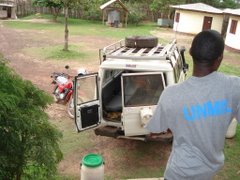
Most Travel, and certainly the rewarding kind, involves depending on the kindness of strangers, putting yourself into the hands of people you don’t know and trusting them with your life. This risky suspension of disbelief is often an experience freighted with anxiety. But what’s the alternative? Usually there is none.
~ Paul Theroux
There was no alternative for me in Sarajevo, until I met Verijan. There was no alternative for me in Nigeria, until I met Justus. There was no alternative for me in Kenya, until I met Henry. There was no alternative for me in Cario, until I met Nader. There was no alternative for me in Yangon, until I met Htaik and Hazlitt. In between such encounters I have been lucky enough to meet dependable taxi drivers in Sierra Leone, thoughtful guest house owners in Thailand, willing direction givers in the labyrinth alleys of Marrakesh, and helpful unsolicited translators all over the planet. This is not to say that I haven’t been robbed, swindled, cheated, or conned but, it is these experiences of angst that allow us to truly celebrate the kindness of strangers when we are at our most vulnerable.
I have not posted in a while. I’m not exactly sure why, but I have returned to share with those loyal readers who keep checking in only to find silence on the screen, what has been on my mind. What I have been thinking about since I returned from the unspoken place has been the listener-storyteller relationship. In my projects in West Africa and South East Asia I have learned much about being human and acting humane. Listening to survivors stories in these places has been painful but it has also been bearable because each and every story teller I have encountered was able to teach a lesson about survival and healing and it appeared the simple act of telling was reparative.
One Bosnian doctor explained this aspect of the listener-storyteller relationship in Mollica’s book Healing Invisible Wounds:
Whenever you tell a story you feel better. I will give you an example of the Bosnian people from the Muslim religion. They do not cry too much. The females go to the funerals and they speak a lot. They repeat and repeat the story. I have had a chance to listen to this several times in several tragic stories on many occasions. They stories are like a tape with the same words and sentences. And each time before they finish, the storyteller is much happier than before, and the listener becomes wealthier from receiving new knowledge. (Mollica, 2006)
The repetition of the story makes the storyteller more comfortable and in effect having listener is part of the therapeutic process. Many of my students, both graduate students from DU as well as community advocates and passionate volunteers in the field, ask me the same question after learning about trauma, PTSD and it’s impact on human functioning.............They told me their story, now what? This is the inevitable next question a counselor/therapist will ask after they are able to build enough trust to be gifted the trauma story of a survivor. Helpers want tools to “fix” the problems and the reality is that there is no magic wand, no super pill and no scientific procedure that can fix a wounded soul other than to honor the fact that they have lived to tell their story. I agree with Mollica when he says that “listeners need to remember that the inherent purpose of trauma stories is healing and survival. Survivors must be allowed to tell their stories in their own way” and “We must not burden them with theories, interpretations, or opinions, especially if we have little knowledge of their cultural or political background. “ Storytelling is in fact a healing art and listening is as growth promoting as telling if we just have patience and are able to integrate both the pain of the trauma sufferer as well as power of the survival tale.
Sunday, August 8, 2010


Tuesday, May 11, 2010
chai encounter

Today I finished my third 300 plus page novel in less than a week. Although I feel like a proud daughter when I find myself in a ferocious reading spree as my mother put all other casual readers to shame, I am feeling a bit nervous because I only have one book left and I have 7 days to go before I head back to Chiang Mai (the travelers book exchange heaven for well-read, well-traveled paperbacks). I decide to head down the road for a Chang, the local brew, in the service of creating something else to do, and maybe to slow down my reading spree. Last night I taught English to a group of three young ladies and one young lad at the local noodle shop. This has been a SalusWorld tradition in this project and at first I didn’t want to disappoint the consultants who came before me. Twice a week for eight months visiting consultants have been holding English classes at night in a noodle shop that sprang up a few short months after our arrival in this displaced Shan village in northern Thailand.
To be totally honest I didn’t really want to do it. I’m a psychologist for goodness sake. After spending 10 minutes with these kids I realized it was the best guilt based decision I had ever made. They were sharp and sweet and keen to learn. I pray I teach them as much English as they have taught me Shan, but I doubt it; one of them busted me last night for spelling Wednesday wrong. Based on the fact I so enjoyed myself with them and because they asked, we upped the evening classes from 2 to 4 times this week and I am stoked. My best lesson to date has been to teach them the alphabet in American Sign Language, the first foreign language I studied. The lights went out during our lesson and I heard them correcting each other practicing the signs as they walked home from escorting me back to my abode with candles.
I have a day and night free and I have no idea what to do with my time. Last month I was training, frantically prepping for a pending training or engaging in delightful supervision sessions with amazing team of coordinators. The sudden slowdowns in life have unfortunately never been easy for me. It seems I feel more balanced with a check list of activities to get done rather than relaxing in one of the most sought after travel destinations in the world. For some reason I can’t warm myself to Thailand. It is beautiful no doubt, but I find myself agitated whenever I am here, longing for other less developed and much less tourism savvy environments on the planet like Lofa, Yelwa and Dagon Plaza.
As I saunter down the street to the market to buy my Chang and some snacks of dried fish and rice cakes I see a guy from a distance. The first thing I notice is that he can squat on his hunches Third World-style, indefinitely. For some reason I find myself longing to speak Thai so I could saunter up to him and strike up a conversation. As I draw near, I realize I know this guy. It is Chai. Chai is a whisper of a man but hip in his own way and not in the slightest way anachronistic. Berkley cool in worn out clothes, wiry, muscular, flip-floped, well over fifty but doesn’t look a day older than thirty-five. A week of acclimating to the land of maybes and half-smiles, longing for a place and it’s people just across the border, I find him, or he finds me, sauntering down the road sweating and somehow fearful of the motorbikes coming at me on the empty paved road. For some reason I have this nagging feeling that a few of my local passer-byers have a itch to hit me and might even consider doing it they could be assured they could get away with it. He greets me kindly and I tell him I will be right back as I notice they are closing up the market and I want to get the treats I had been planning for (God forbid I skip the beer and barrel through my last novel). As I walk back I am given another chance to watch him and I am struck by how much I like this guy, given I know so little about him. The last time I was here I had asked after him and I had been told he was nowhere to be found and that maybe he had returned to Shan State. 14 months later, out of nowhere, there he is smiling at me, as engaged as I remember him. We smile and shake our heads in that this is unbelievable kind of way and then he moves towards his motorbike and says “home?” At first I baulk and refuse because that is what “we” should do when an oppressed illegal immigrant on a bike offers a ride to a privileged white gal in fancy sunglasses sweating along the roadside. He turns his head like a trusted dog does paying attention to you when you are telling them a story, trying to make meaning out of the nonsense coming out of your mouth. I quickly realize I am being foolish and awkwardly jump on his bike because the pegs are not out and I unconsciously have the residue of a long forgotten bike trauma (a burn on the leg from a Harley that was only slightly more dangerous than it’s driver) burned into my memory and my calf. Chai’s English ranges from profoundly good to non-existent; so, I chat away on the back of the bike showering him with genuine compliments based on what I remember about his participation in my first 2 week training on basic counseling and I ask him how his trip to Shan State went. I have no idea what he understood as he only grunted and then dumped me in front of my house, smiled, and turned around and left. He has an idle power I envy and I remain hopeful that is not the last of our ever so random encounters.
Saturday, May 8, 2010
Saying all that cannot be said in words

They each step down from the truck taxi to say goodbye. The one driving suggests a group hug and we all quickly form a circle. They each place their hands on my back and I on theirs and we lean forward so that our heads meet in the middle, resulting in us each looking at our sandaled feet. Between telling me thank you in the most genuine of ways and asking me if I am packed, they manage to be truly genuine and in the moment as well as active and forward thinking. I like the way they each can fluctuate from a mindful relaxed presence to a multi-tasking high speed processor; I have yet to figure out how they do it, when I try I just look flustered. I want to hug each one of them but I can’t, I’m not sure if my newly acquired comfort with embracing and being embraced will translate here. I smile and think of how proud my friend Jules would be if she could see me now. Her relentless persistence gradually desensitizing me to touch has worked. I used to be awkward and uncomfortable with gestures of intimacy and would get confused with the three cheek kiss greeting of Europe, finding myself head butting unprepared recipients. I like the way I have changed and have learned to appreciate everything from a wink to fingers dancing on my arms to a warm embrace fluttering over my shoulders, to a gentle touch on my back. Saying all that cannot be said in words, the nonverbal world of communication has transformed my experience of the world and its people and I feel my throat get tight and my eyes get hot and I know it is once again time for me to cry the honorable tears of loss. It is only those meaningful relationships that we grieved when lost and I know deep in my heart and soul that the meaning I have found here has been deep and profound.
The approximate wetness of hope
What is the proper number of kisses
For a man to leave this world?
The average depth of melancholy?
The approximate wetness of hope?
~ Max Garland
Thingyan, which translates “transit of the Sun from Pisces to Aries” is the Local New Year Water Festival and usually falls around mid-April, the Local month of Tagu. It is celebrated over a period of four to five days culminating in the Local New Year. The days are filled with loud music and truck loads of giddy young people tossing water and singing. The nights are filled with musical performances on stages that sprouted up like weeds overnight in the cracks of a sidewalk. In every neighborhood mandats or stages, with festive names, made from bamboo, wood and beautifully decorated paper mache and merrymaking and general gaiety are the main ticket items, day in and day out.
During the first two days of Thingyan, I saunter the streets of Y and got absolutely soaked by passing celebrators with buckets of water, modern day squirt guns and a keen eye for foreigners. On the third day I stayed in as I discovered I was quite sunburned on every patch of skin I missed applying sun screen to the day before and I was tired of being such an identifiable target. I also knew I would be out all day the following day as a group of my first training participants invited me to an event called Heaven and Hell which was an amusing surprise given I was at that time residing in a majority Buddhist country that finds the idea of heaven and hell to be a bit comical. The plan was they would pick me up at 7 am and we would be out all day dancing, singing and engaging in the collective merrymaking.
Around 6 pm I got the call. There had been a bombing and the location of the explosion was the very stage that we had planned to go to the following day.
According to the news media:
“three bomb blasts rocked a park in M's main city Y on Thursday as thousands of revellers celebrated an annual water festival, leaving nine people dead and at least 75 wounded, officials said. The blasts occurred near Kandawgyi Lake in the military-ruled country's commercial hub, where thousands of people had gathered for water-throwing festivities to mark the Buddhist New Year.
"Nine people were killed -- five men and four women," an official told AFP on condition of anonymity, adding that a fourth bomb was found and defused. State television gave a slightly different toll, saying eight people had died and 94 were injured. The blasts came as the country prepares for elections planned for this year that critics have dismissed as a sham.”
Over the course of the next few days the numbers varied greatly and reports of suggested perpetrators covered the whole continuum from hunches to conspiracy theories.
I missed the event and felt the heaviness of having planned to be in a place that happened to have been bombed 17 hours prior to my arrival but I also felt the hope and collective ability to adjust, regulate and normalize an existence that has rarely in its recent history been delivered to such an oppressed group of people.
For a man to leave this world?
The average depth of melancholy?
The approximate wetness of hope?
~ Max Garland
Thingyan, which translates “transit of the Sun from Pisces to Aries” is the Local New Year Water Festival and usually falls around mid-April, the Local month of Tagu. It is celebrated over a period of four to five days culminating in the Local New Year. The days are filled with loud music and truck loads of giddy young people tossing water and singing. The nights are filled with musical performances on stages that sprouted up like weeds overnight in the cracks of a sidewalk. In every neighborhood mandats or stages, with festive names, made from bamboo, wood and beautifully decorated paper mache and merrymaking and general gaiety are the main ticket items, day in and day out.
During the first two days of Thingyan, I saunter the streets of Y and got absolutely soaked by passing celebrators with buckets of water, modern day squirt guns and a keen eye for foreigners. On the third day I stayed in as I discovered I was quite sunburned on every patch of skin I missed applying sun screen to the day before and I was tired of being such an identifiable target. I also knew I would be out all day the following day as a group of my first training participants invited me to an event called Heaven and Hell which was an amusing surprise given I was at that time residing in a majority Buddhist country that finds the idea of heaven and hell to be a bit comical. The plan was they would pick me up at 7 am and we would be out all day dancing, singing and engaging in the collective merrymaking.
Around 6 pm I got the call. There had been a bombing and the location of the explosion was the very stage that we had planned to go to the following day.
According to the news media:
“three bomb blasts rocked a park in M's main city Y on Thursday as thousands of revellers celebrated an annual water festival, leaving nine people dead and at least 75 wounded, officials said. The blasts occurred near Kandawgyi Lake in the military-ruled country's commercial hub, where thousands of people had gathered for water-throwing festivities to mark the Buddhist New Year.
"Nine people were killed -- five men and four women," an official told AFP on condition of anonymity, adding that a fourth bomb was found and defused. State television gave a slightly different toll, saying eight people had died and 94 were injured. The blasts came as the country prepares for elections planned for this year that critics have dismissed as a sham.”
Over the course of the next few days the numbers varied greatly and reports of suggested perpetrators covered the whole continuum from hunches to conspiracy theories.
I missed the event and felt the heaviness of having planned to be in a place that happened to have been bombed 17 hours prior to my arrival but I also felt the hope and collective ability to adjust, regulate and normalize an existence that has rarely in its recent history been delivered to such an oppressed group of people.
“Hopenmar” – An environmentally friendly visit from twelve guys and a girl

I returned to the unspoken city 2 weeks ago. A few short hours after I arrived I was invited to the closing ceremony and celebratory dinner of a motivated group of young local and Chinese activists. The topic of their shared interest: the environment and global warming. All I have to say is that, “Hopenhagan, you should be ashamed.”
As soon as I arrive I discover two giddy groups of participants, one group local, one group Chinese. They were truly enjoying each other and excited about their shared vision – green living and sustainable green development. I observe playful yet serious dialogue, and it was clear they all have deep respect and admiration towards each others plight. While the Chinese activists struggle with an all powerful controlling administration that the world fears and obsesses about, they and their hosts quickly realized their struggle pales in comparison to the plight of the local activists in attendance. One Chinese activist takes care to express just that in his farewell speech. According to him, while it is frustrating to be living is such a controlled country; at least the rules and regulations are clear and transparent. In this place, it’s an altogether different game and a much more confusing existence. Nothing is clear and the word transparency is only spoken in whispers.
For those of you who haven’t heard me say it a hundred times already, it is important to note it has been very hot here; and, when I say hot I mean it has been 100 degrees plus every stinkin day. One Chinese participant also made note of the heat during his speech but he added one important fact to his observation: “The weather here is very warm, but the people are warm too.” If you asked me, I would say the people of this place may be the warmest people on the face of the planet but, that’s just me and although I have visited many places, I haven’t quite visited them all.
By the end of the event I realize that I (an American who has been indoctrinated with fears of pending Chinese takeover of the planet and some underlying stereotypical beliefs that environmental concerns take a back seat to currency control and exports and falls just ahead of human rights concerns in China) have fallen victim to a tremendous amount of misinformation. The reality is China is as diverse as a New York City subway and if this passionate young group of students represents even a small part of their rather large Republic. We my friends, are greatly mistaken.
The accomplishments and concluding thoughts of this youth initiative focused on global warming thought up by and accomplished by two groups of what many in the west would all assume to be disempowered and uninformed group of civilians, blew the events in Copenhagen a few short months ago out of the water; and, if Obama were smart, he would come here and meet with this group and learn a few lessons on international engagement and strategic green development.
I will end this train of thought with another quote, this time it was from one of the local participants to the China team which happened to be made up of a dozen men and one lone woman: “As we are living under the same Sun and walking on the same Land, we are together in our heart to act for our environment. We love you, brothers and sister.”
Tuesday, December 22, 2009
the possibilities of 2010...
For many months I have been a psychologist on the outskirts of two identities: one being a trauma psychologist and trainer of local counselors in international disaster environments, another being a clinician maintaining a much more traditional role, gradually building a private practice in Denver. Nearly every morning since my return from Burma I drive to my favorite fitness studio. I have done so on snowy roads, rainy roads and fall time roads. This ever-changing driving experience makes it feel like I have been back much longer than I have. During the day I see clients, attend meetings and write grants with the hopes that both worlds can continue to be a part of my life. Currently it seems I am existing in limbo between these two identities searching for sustainability and nourishment.
I wake up early because mornings are my favorite. Waking up before the sun makes it feel as though the world is my secret. I walk the dog in the dark, pleased to see there are no other lights on in my building and return to smell the aroma of fresh coffee grounds from the canister. The ritual is pleasing because it is something I do in both lives and it is one of the few consistencies in my exceptionally inconsistent life. The one thing I miss about doing this in Burma and Thailand is watching the monks walk the streets gowned in red and gold, humbly asking for alms.
Inwardly I feel both at peace with my role in life and suffer quiet trepidations of a woman who has witnessed too much global human suffering in all its forms. My clinical practice is growing slowly and has been blessed by the dedication of brave souls who desire happiness in all its forms. In the end I do the same thing here as I did abroad; listen, reflect and empathize. That’s the thing about humanity, in the end we are more alike than we are different and I tend to feel sadness for the western who thinks that I couldn’t possibly practice here after seeing what I’ve seen abroad in conflict zones are counties enduring horrific government oppression. That for some reason I might feel bored with the stories of my clients in America baffles me. The truth in the matter is I have seen just as much pain, just as much suffering, just as much torment in the West as I have seen abroad.
It’s the dead of winter, the mornings darker longer and my window only gets a short sliver of the direct sun before it passes over the building and leaves for the evening. I can’t quite tell if it is this that affects my mood or if it’s something bigger, something more existential. While most of the time I am deeply, seriously happy and content with my life, in part because I am deeply, seriously and contentedly in love with an amazing man, I also experience moments where darkness rumbles through me as if my soul is suffocating in cement.
While my personal life is in a great place; blessed by love, family and friendships all over the world, I hope I find a way to make my professional life work. I love my life in all its colors but given the painful loss I endured just over a year ago and the complicated nature of my work, it has been a tricky life as of late. For example, it is painfully hard to hear that psychiatric treatment and child protection are not a right or even an option in most parts of the world. The good news is that as I close my eyes, my tired self is swept by waves of gratitude for what I have and the possibilities of 2010.
I wake up early because mornings are my favorite. Waking up before the sun makes it feel as though the world is my secret. I walk the dog in the dark, pleased to see there are no other lights on in my building and return to smell the aroma of fresh coffee grounds from the canister. The ritual is pleasing because it is something I do in both lives and it is one of the few consistencies in my exceptionally inconsistent life. The one thing I miss about doing this in Burma and Thailand is watching the monks walk the streets gowned in red and gold, humbly asking for alms.
Inwardly I feel both at peace with my role in life and suffer quiet trepidations of a woman who has witnessed too much global human suffering in all its forms. My clinical practice is growing slowly and has been blessed by the dedication of brave souls who desire happiness in all its forms. In the end I do the same thing here as I did abroad; listen, reflect and empathize. That’s the thing about humanity, in the end we are more alike than we are different and I tend to feel sadness for the western who thinks that I couldn’t possibly practice here after seeing what I’ve seen abroad in conflict zones are counties enduring horrific government oppression. That for some reason I might feel bored with the stories of my clients in America baffles me. The truth in the matter is I have seen just as much pain, just as much suffering, just as much torment in the West as I have seen abroad.
It’s the dead of winter, the mornings darker longer and my window only gets a short sliver of the direct sun before it passes over the building and leaves for the evening. I can’t quite tell if it is this that affects my mood or if it’s something bigger, something more existential. While most of the time I am deeply, seriously happy and content with my life, in part because I am deeply, seriously and contentedly in love with an amazing man, I also experience moments where darkness rumbles through me as if my soul is suffocating in cement.
While my personal life is in a great place; blessed by love, family and friendships all over the world, I hope I find a way to make my professional life work. I love my life in all its colors but given the painful loss I endured just over a year ago and the complicated nature of my work, it has been a tricky life as of late. For example, it is painfully hard to hear that psychiatric treatment and child protection are not a right or even an option in most parts of the world. The good news is that as I close my eyes, my tired self is swept by waves of gratitude for what I have and the possibilities of 2010.
Saturday, November 7, 2009
remarkably different meanings
One of my funniest lost in translations moments to date began with a simple question: how long?
It was a typical training day, one like any other. For me, this meant a fine balance between didactic lessons and experiential trust building activities that facilitate self-disclosure and the feelings of the therapeutic experience rather than simply an intellectual understanding of the therapeutic experience. With time and experience I have found that my students all over the globe are much like I was when I was a green inexperienced therapist: suckers for a good case study and a deeper understanding of all the fascinating diagnosis that touch our captivating species. So the idea was to first teach a wide variety of diagnosis from depression to anxiety with PTSD and Bi-Polar mood disorder at the spectrum ends (for those of you who are curious these are all diagnosis I have seen in the numerous developed and undeveloped countries I have worked in).
As I explained each symptom constellation I stressed that the point was not to diagnosis just to diagnosis but rather to enlighten the patient, the counselor and his or her family about their experienced emotional or psychological struggles and to create a plan towards less suffering, less confusion and an experience of feeling less alone in the world. After I explained the 9 most common disorders, disorders that occur on average in 1 in 20 individuals at least once in their lifetime in a stable environment (now for a minute consider what the rates must be in environments that have been impacted by war, human rights violations, discrimination and mass violence has on psychological well being), I told them we would be would be playing a diagnosis game. I shared 8 case studies and they were to diagnosis each case base on the symptoms presented and described. The two most important features to differentiating between spectrum diagnosis (like dysthymia and major depression or acute stress disorder and post traumatic stress disorder) are frequency and duration; or, “How long and how often?”
This is where it all began. In my dramatic presentation of each diagnosis full of tears, hand wringing, lethargy, flashback and obsessive checking behavior I always ended with, “always remember we should ask for how long and how often the symptoms have been present.” Each time I said this I sensed something. It wasn’t anything that was said or even any non-verbal signs just something in the air I suppose. As I got more dramatic in my acting out of various symptom consolations came a more relaxed audience who were getting a kick out of me making a fool of myself. As they became more relaxed, the more noticeable reactions I started to get to my “now remember always ask for how long and how often the symptoms have been present.”
The module went on and they got completely enthralled by the case studies and the diagnosis game that I forgot about all the subtle confusion I was feeling and went on with my day. The next day I was enjoying a cup of 3-in-1 Nescafe while groups of trainees prepared for a pending presentation when one of the participants approached me quietly and asked if we could chat. He shared part of her personal story and then, as others started moving towards us, quickly changed the subject and said, “Gwan I have to tell you something funny about something you have been saying a lot lately.” At first I was worried that maybe I was saying or doing something that was culturally inappropriate and he was trying to be nice about breaking the news to me, but instead he said, “it’s when you say how long.”
“How long?” I replied. “Tell me more” (tell me more is my classic therapy reaction to just about anything to keep people talking in a non-directive manner).
“Well in Burmese…” he replies, “How long means without longyi.”
“Like someone who wears pants instead of the classic Burmese skirt” (that is commonly worn by both men and women albeit in a gender specific wrap style), I reply.
“No not exactly,” he says, “like when someone’s longyi has fallen off accidently.”
I start laughing which causes him to give out a sigh of relief as he must have been worried I might feel ashamed when I heard such news. I yell out “How long!” and look down at and pat my skirt to make sure it is there and we both crack up. His laugh was so fantastic that I fall into one of my silent laughing fits that lead to tears and breathless gasps (I know those of you who know me best are shaking your heads right now with deep understanding). This loss of control on my part causes everyone in the room to be briefed on the fact I had been briefed by the “how long issue” and after a collective sigh, everyone bursts out in laughter.
From there on out “How Long” was our group’s inside joke and it did wonders for the togetherness and connectivity and I didn’t mind in the least that it was at my expense. When on the final day I wrote “Mr. How Long” on this gentleman’s compliment card it was a sealed deal: we would all always remember an ever so slightly strange and potentially awkward lost in translation moment that turned into an unforgettable shared moment. Given unadulterated shared laughter is such a rare event in environments between foreigners, where language and culture and power and respect and a ton of other potentially disconnecting elements prevent such simple yet important playful events to occur, this lost in translation moment will forever remain a cherished memory for me and I will never again be able to say “how long” without a small smirk and giggle.
It was a typical training day, one like any other. For me, this meant a fine balance between didactic lessons and experiential trust building activities that facilitate self-disclosure and the feelings of the therapeutic experience rather than simply an intellectual understanding of the therapeutic experience. With time and experience I have found that my students all over the globe are much like I was when I was a green inexperienced therapist: suckers for a good case study and a deeper understanding of all the fascinating diagnosis that touch our captivating species. So the idea was to first teach a wide variety of diagnosis from depression to anxiety with PTSD and Bi-Polar mood disorder at the spectrum ends (for those of you who are curious these are all diagnosis I have seen in the numerous developed and undeveloped countries I have worked in).
As I explained each symptom constellation I stressed that the point was not to diagnosis just to diagnosis but rather to enlighten the patient, the counselor and his or her family about their experienced emotional or psychological struggles and to create a plan towards less suffering, less confusion and an experience of feeling less alone in the world. After I explained the 9 most common disorders, disorders that occur on average in 1 in 20 individuals at least once in their lifetime in a stable environment (now for a minute consider what the rates must be in environments that have been impacted by war, human rights violations, discrimination and mass violence has on psychological well being), I told them we would be would be playing a diagnosis game. I shared 8 case studies and they were to diagnosis each case base on the symptoms presented and described. The two most important features to differentiating between spectrum diagnosis (like dysthymia and major depression or acute stress disorder and post traumatic stress disorder) are frequency and duration; or, “How long and how often?”
This is where it all began. In my dramatic presentation of each diagnosis full of tears, hand wringing, lethargy, flashback and obsessive checking behavior I always ended with, “always remember we should ask for how long and how often the symptoms have been present.” Each time I said this I sensed something. It wasn’t anything that was said or even any non-verbal signs just something in the air I suppose. As I got more dramatic in my acting out of various symptom consolations came a more relaxed audience who were getting a kick out of me making a fool of myself. As they became more relaxed, the more noticeable reactions I started to get to my “now remember always ask for how long and how often the symptoms have been present.”
The module went on and they got completely enthralled by the case studies and the diagnosis game that I forgot about all the subtle confusion I was feeling and went on with my day. The next day I was enjoying a cup of 3-in-1 Nescafe while groups of trainees prepared for a pending presentation when one of the participants approached me quietly and asked if we could chat. He shared part of her personal story and then, as others started moving towards us, quickly changed the subject and said, “Gwan I have to tell you something funny about something you have been saying a lot lately.” At first I was worried that maybe I was saying or doing something that was culturally inappropriate and he was trying to be nice about breaking the news to me, but instead he said, “it’s when you say how long.”
“How long?” I replied. “Tell me more” (tell me more is my classic therapy reaction to just about anything to keep people talking in a non-directive manner).
“Well in Burmese…” he replies, “How long means without longyi.”
“Like someone who wears pants instead of the classic Burmese skirt” (that is commonly worn by both men and women albeit in a gender specific wrap style), I reply.
“No not exactly,” he says, “like when someone’s longyi has fallen off accidently.”
I start laughing which causes him to give out a sigh of relief as he must have been worried I might feel ashamed when I heard such news. I yell out “How long!” and look down at and pat my skirt to make sure it is there and we both crack up. His laugh was so fantastic that I fall into one of my silent laughing fits that lead to tears and breathless gasps (I know those of you who know me best are shaking your heads right now with deep understanding). This loss of control on my part causes everyone in the room to be briefed on the fact I had been briefed by the “how long issue” and after a collective sigh, everyone bursts out in laughter.
From there on out “How Long” was our group’s inside joke and it did wonders for the togetherness and connectivity and I didn’t mind in the least that it was at my expense. When on the final day I wrote “Mr. How Long” on this gentleman’s compliment card it was a sealed deal: we would all always remember an ever so slightly strange and potentially awkward lost in translation moment that turned into an unforgettable shared moment. Given unadulterated shared laughter is such a rare event in environments between foreigners, where language and culture and power and respect and a ton of other potentially disconnecting elements prevent such simple yet important playful events to occur, this lost in translation moment will forever remain a cherished memory for me and I will never again be able to say “how long” without a small smirk and giggle.
Subscribe to:
Posts (Atom)